Merlin Rocket
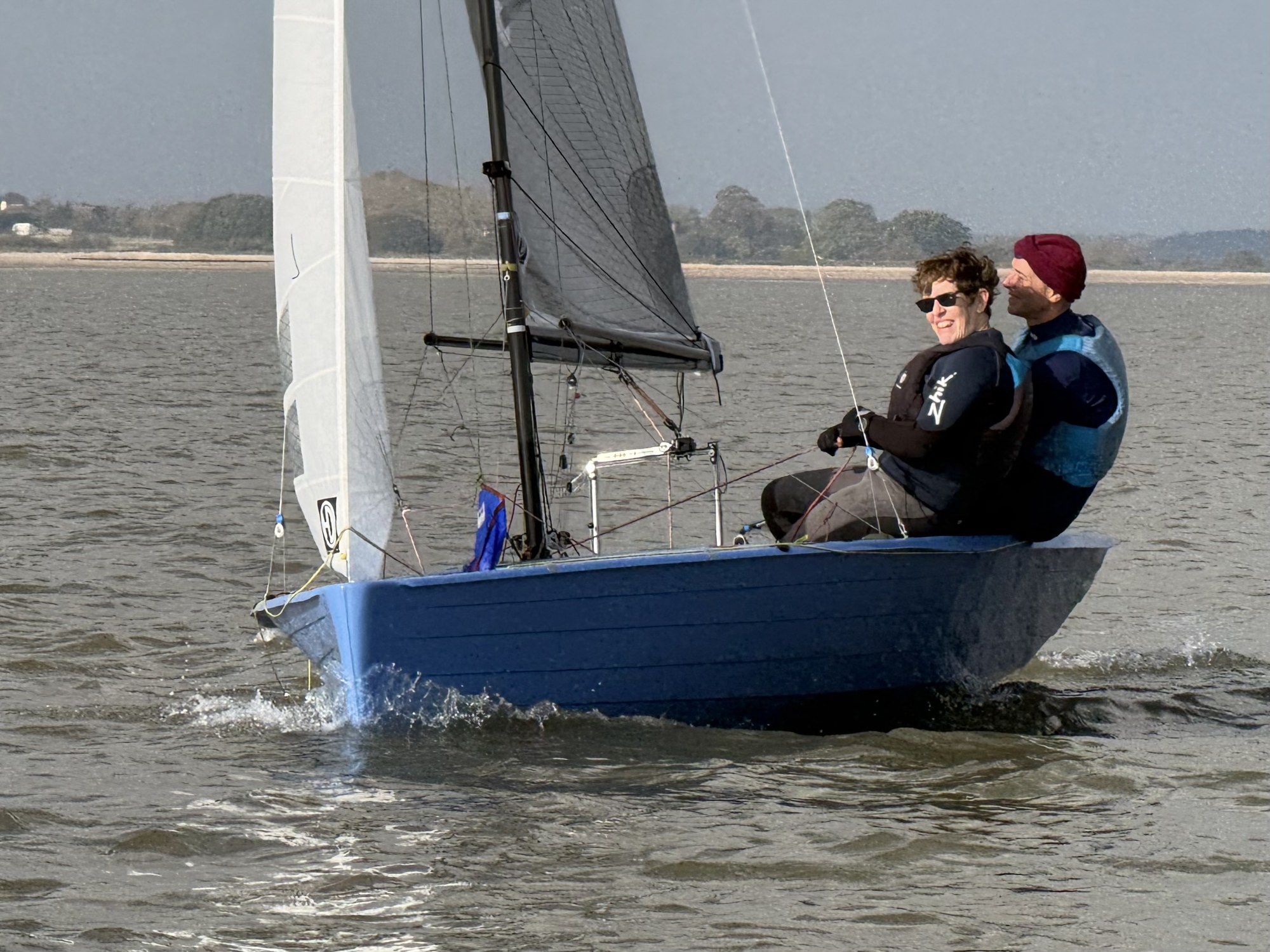
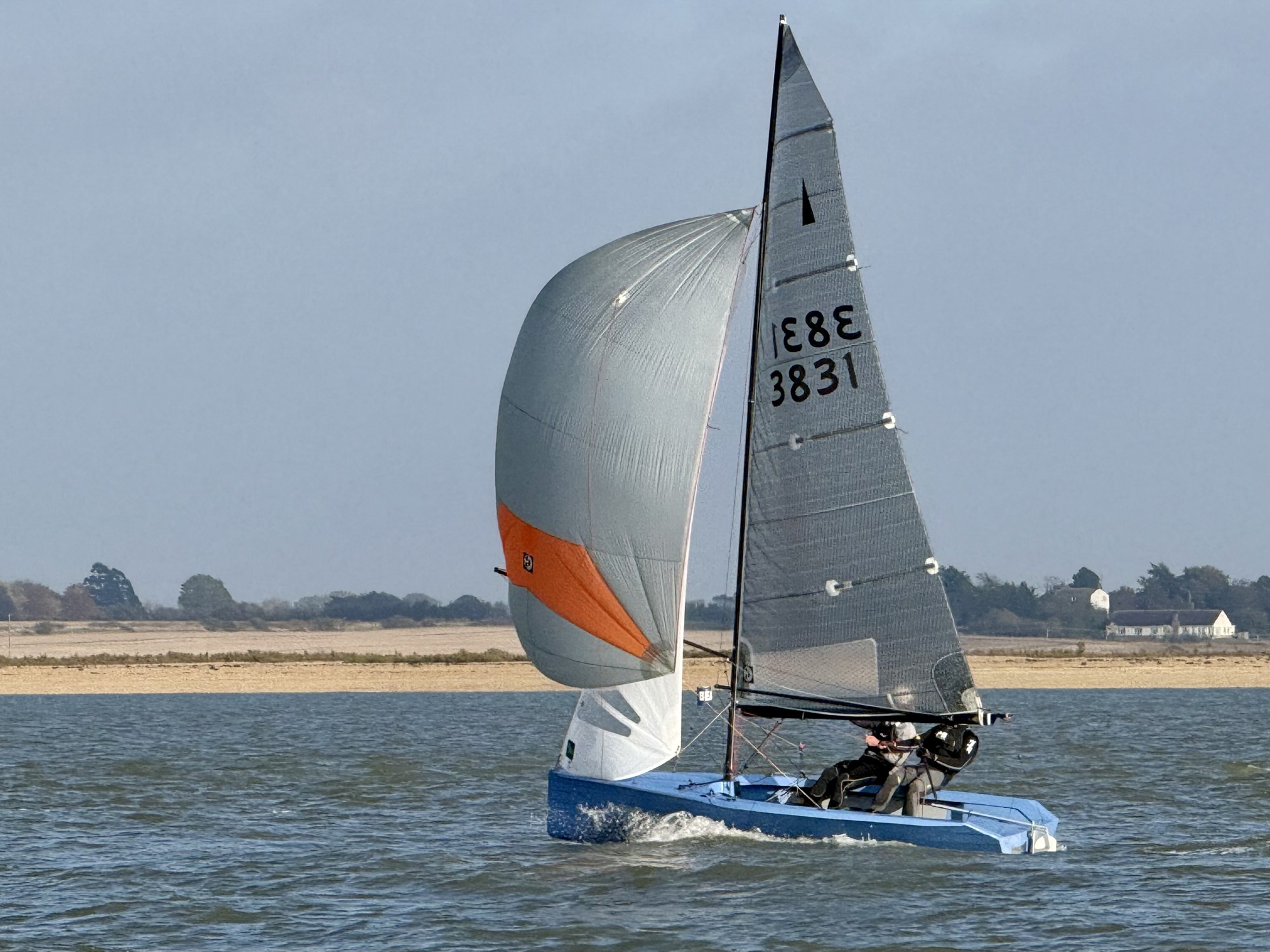
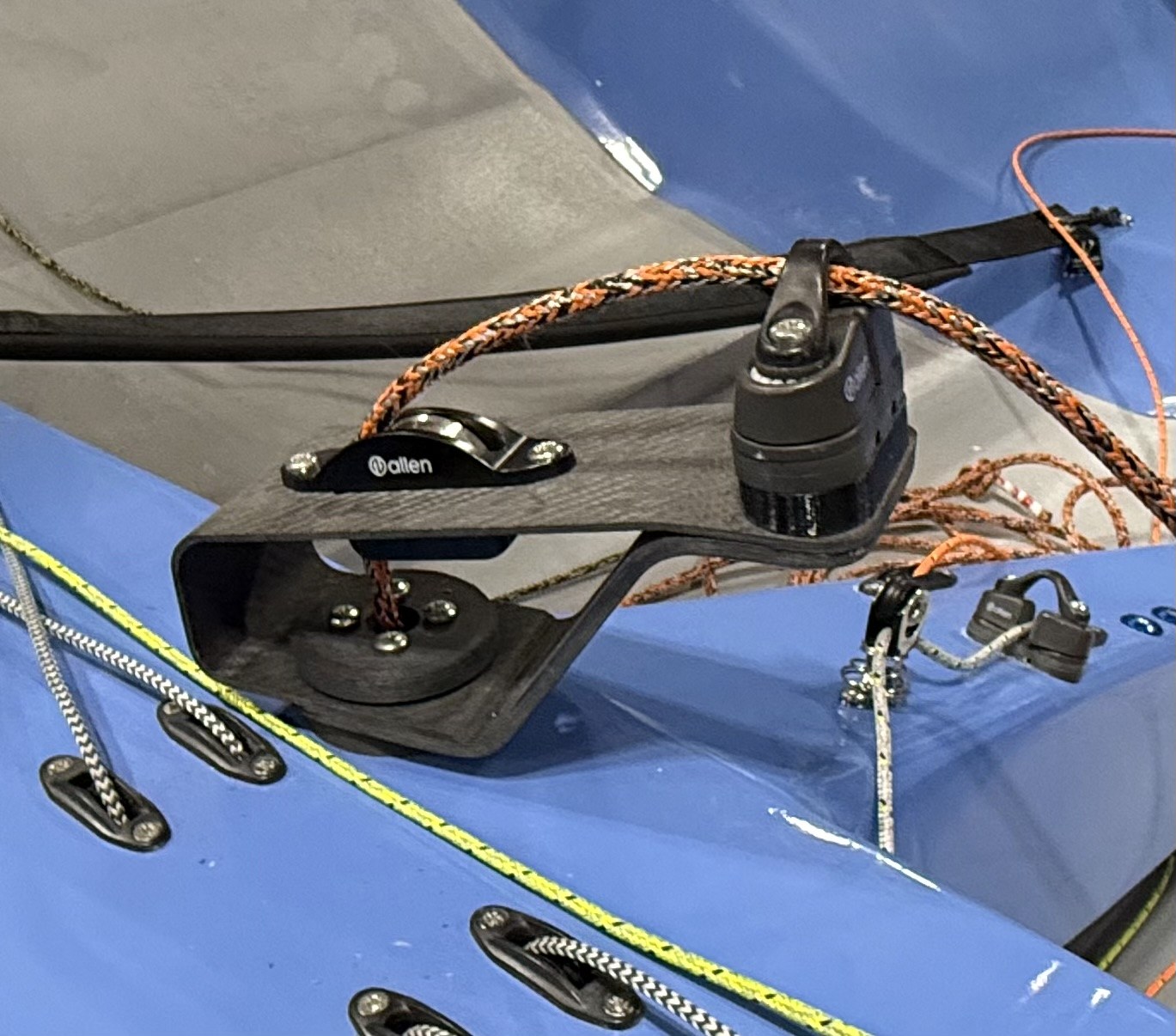
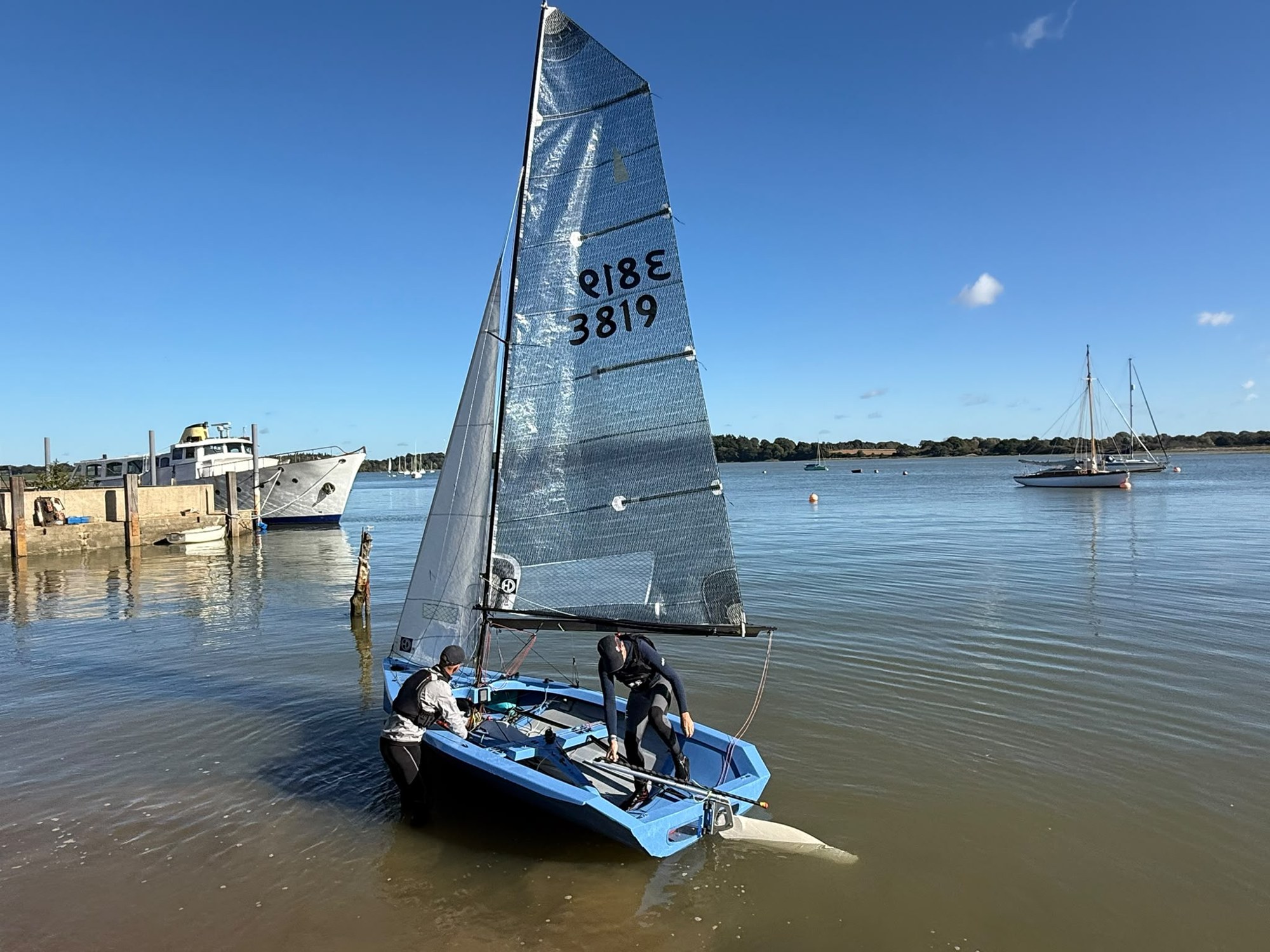
The Synergy Merlin Rocket is a two-person racing dinghy designed by Dave Hollom. Available to order, it combines a distinctive hull shape with Synergy Marine’s approach to construction and fit-out.
On the water
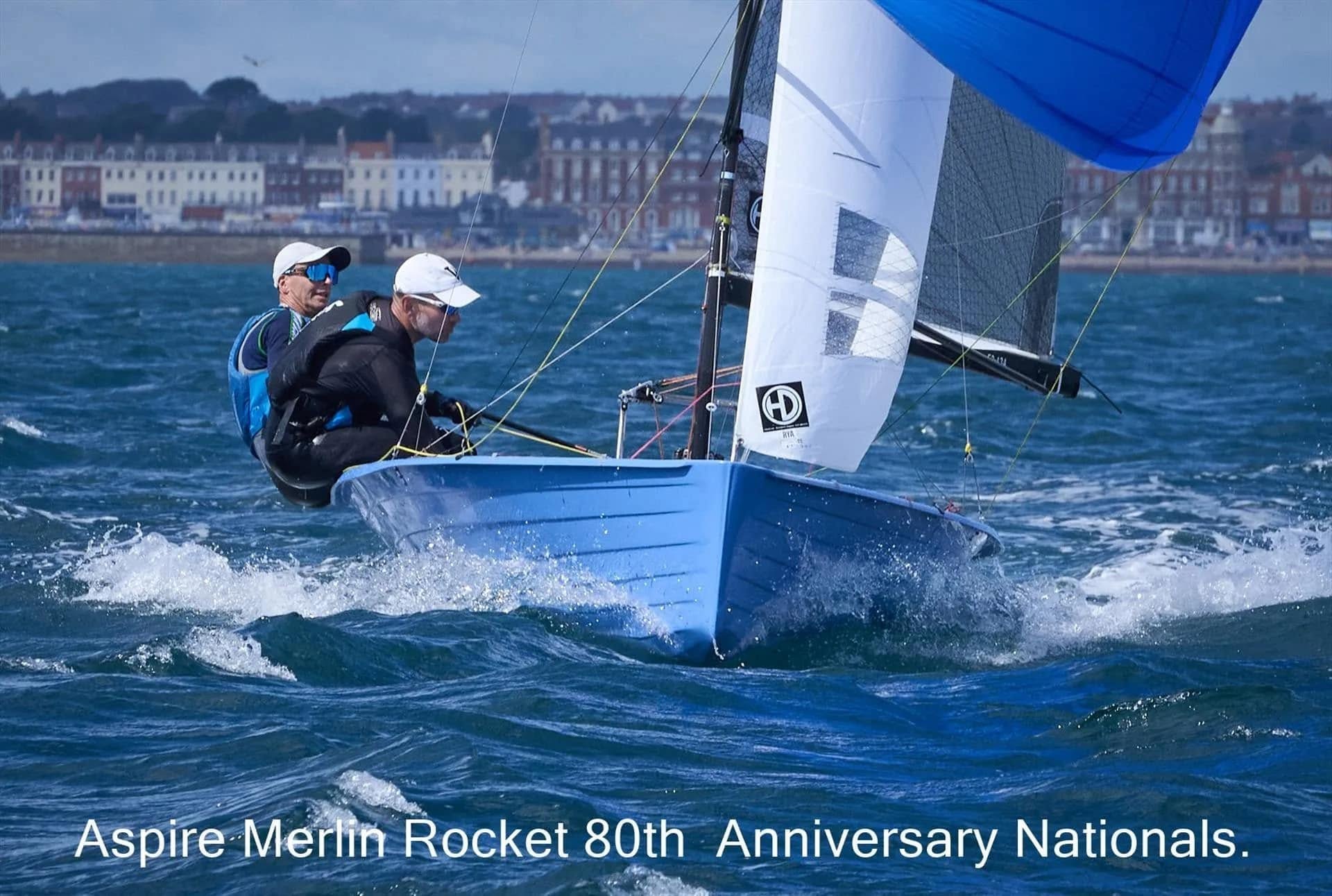
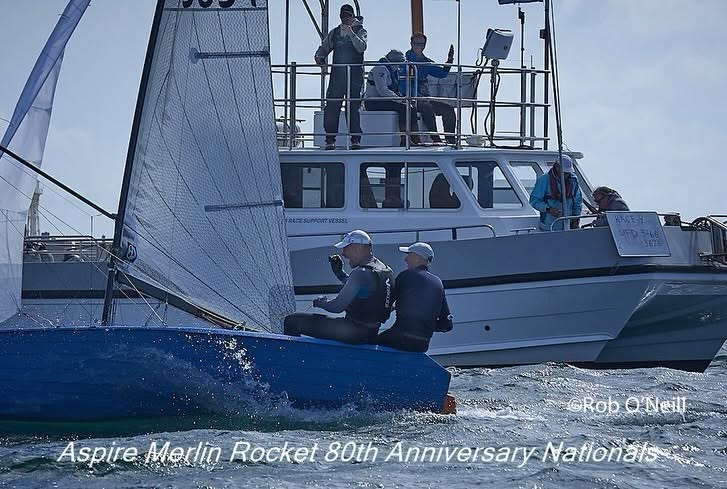
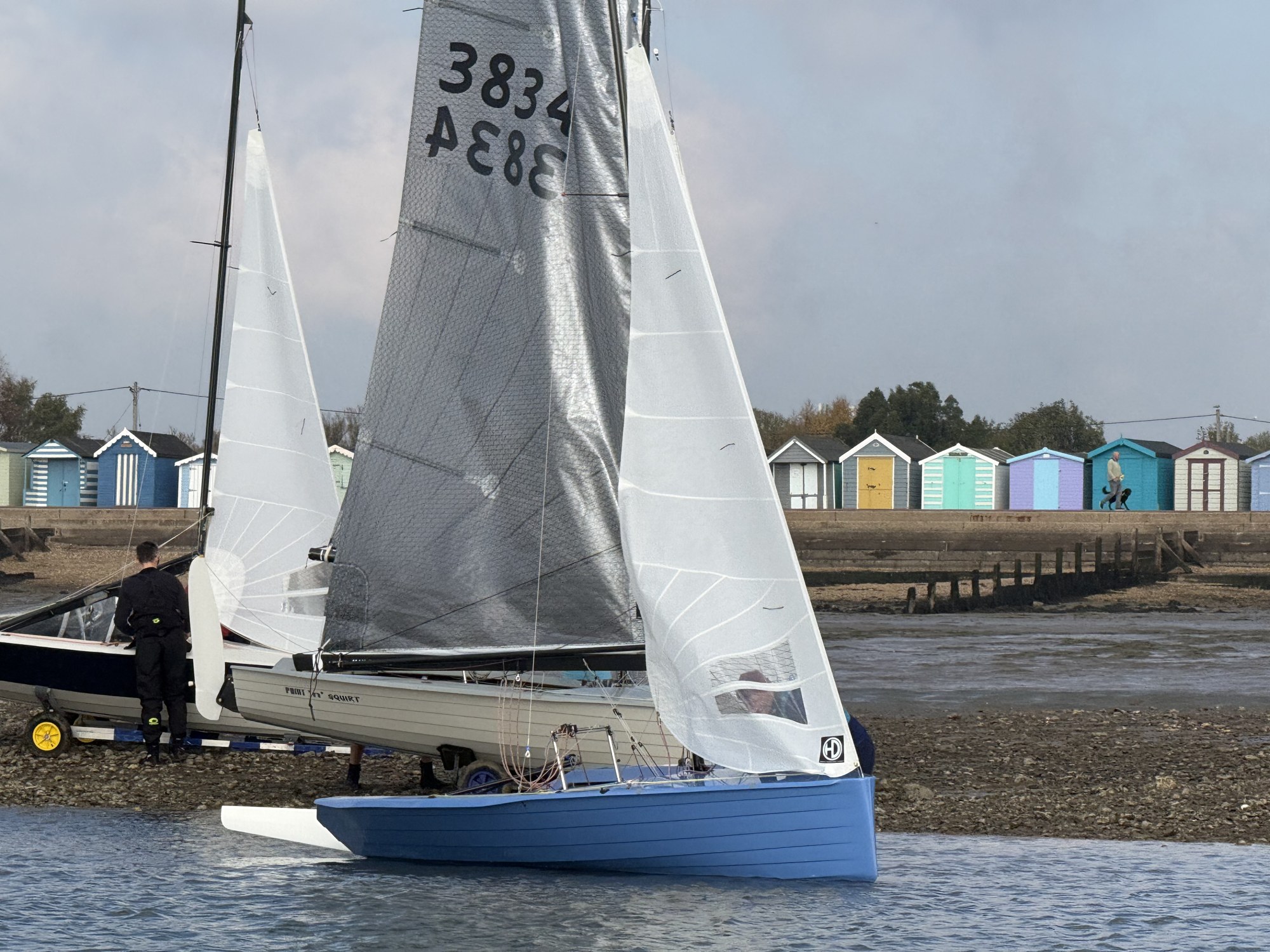
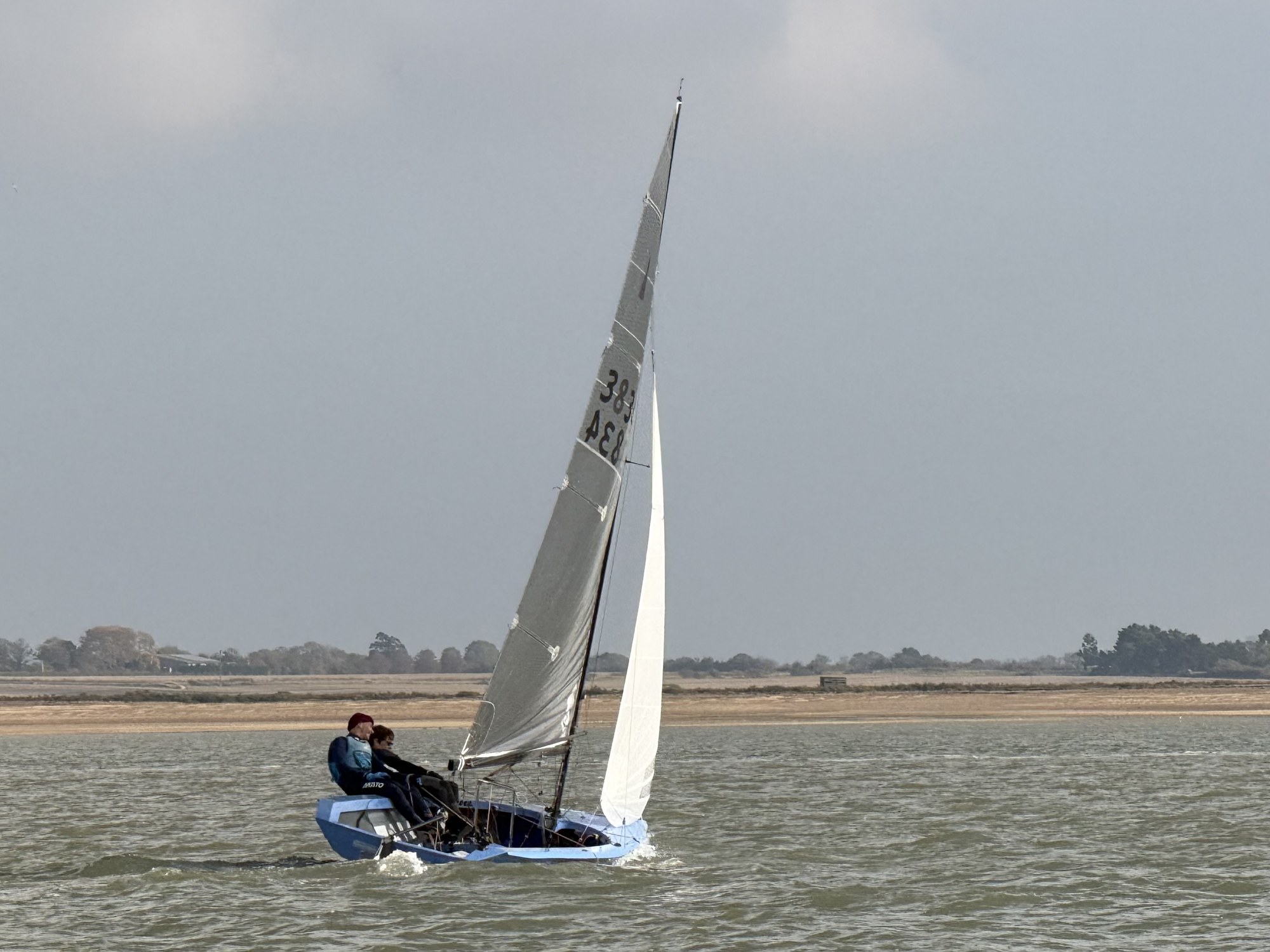
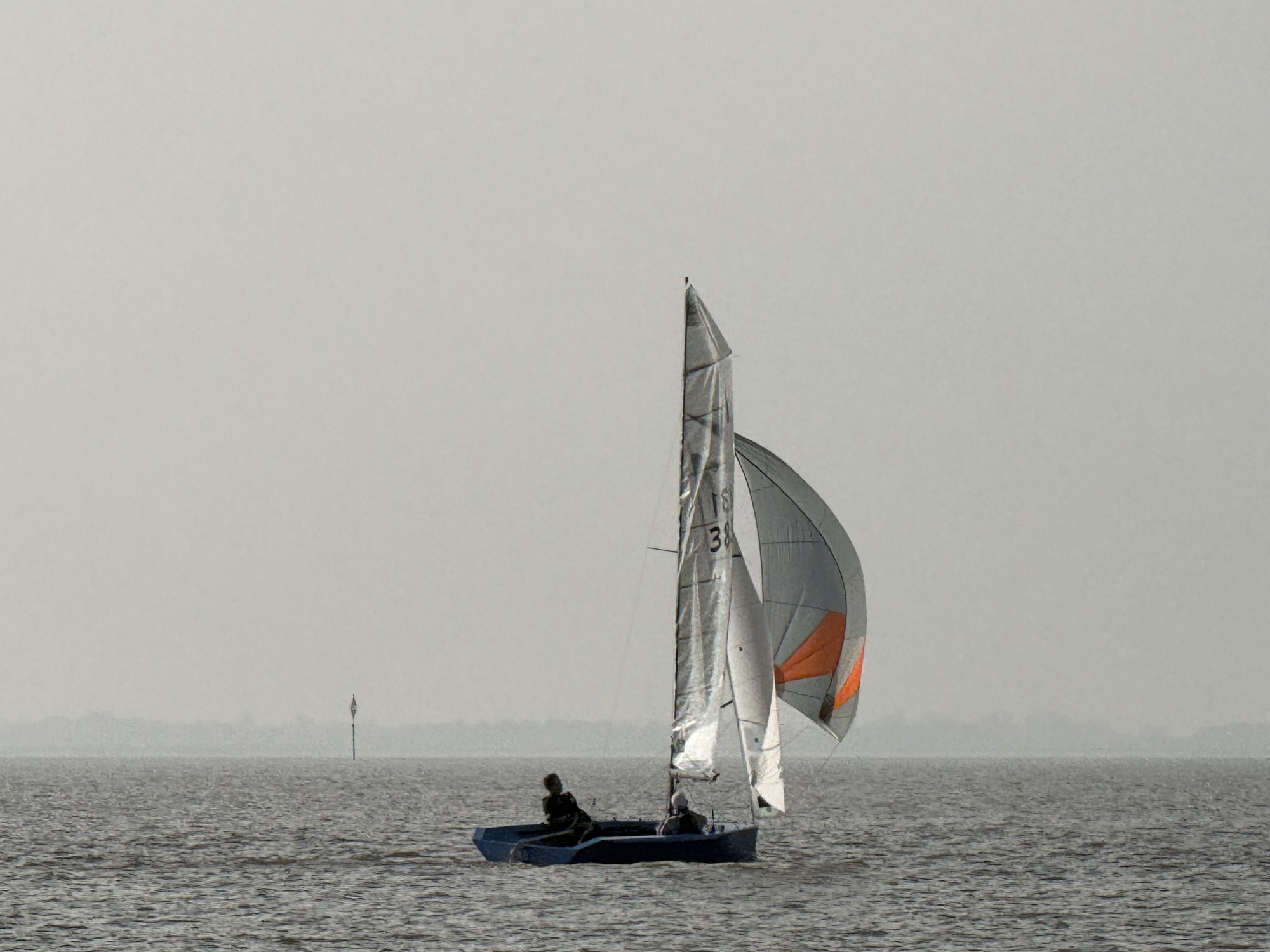
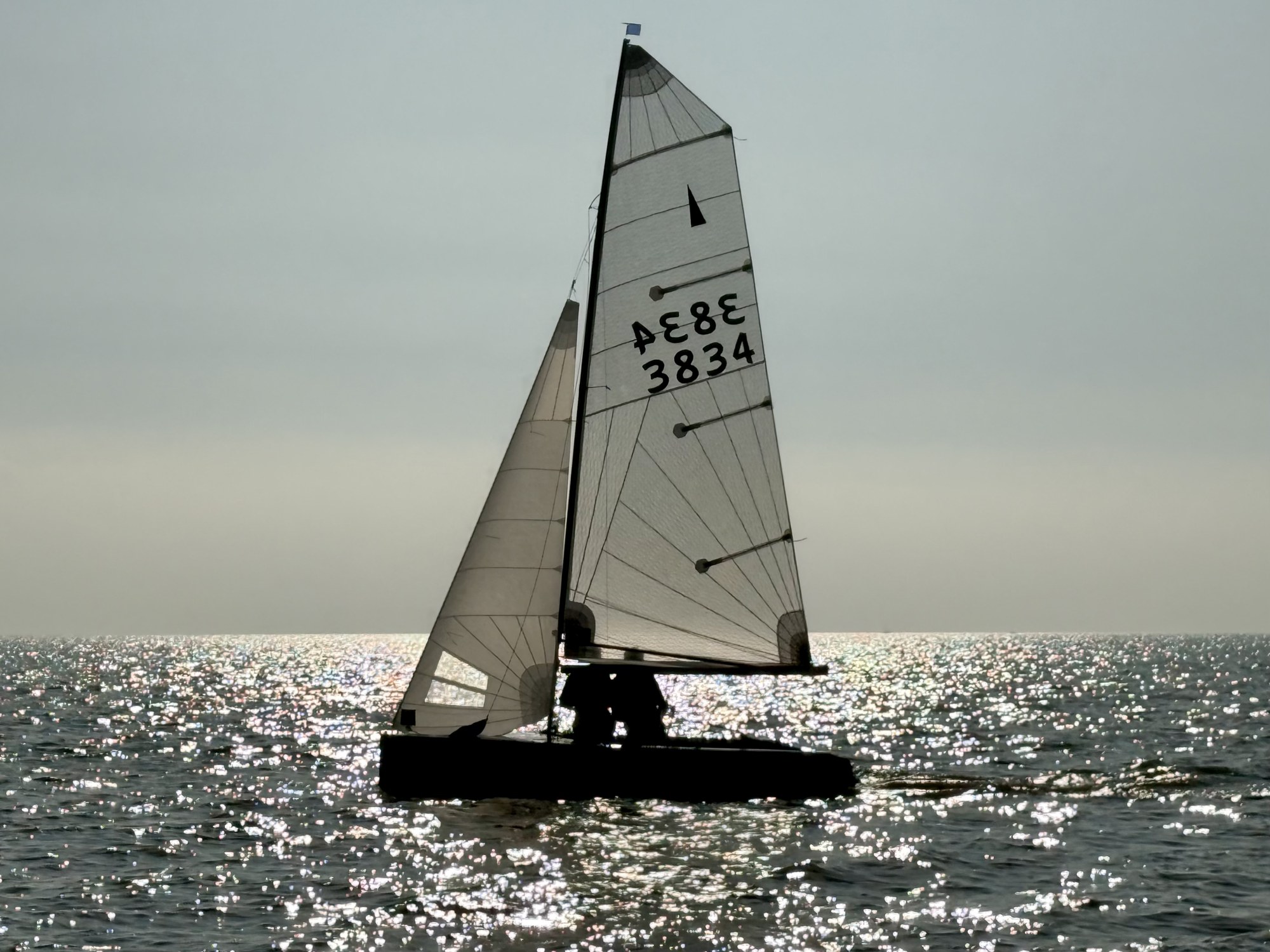
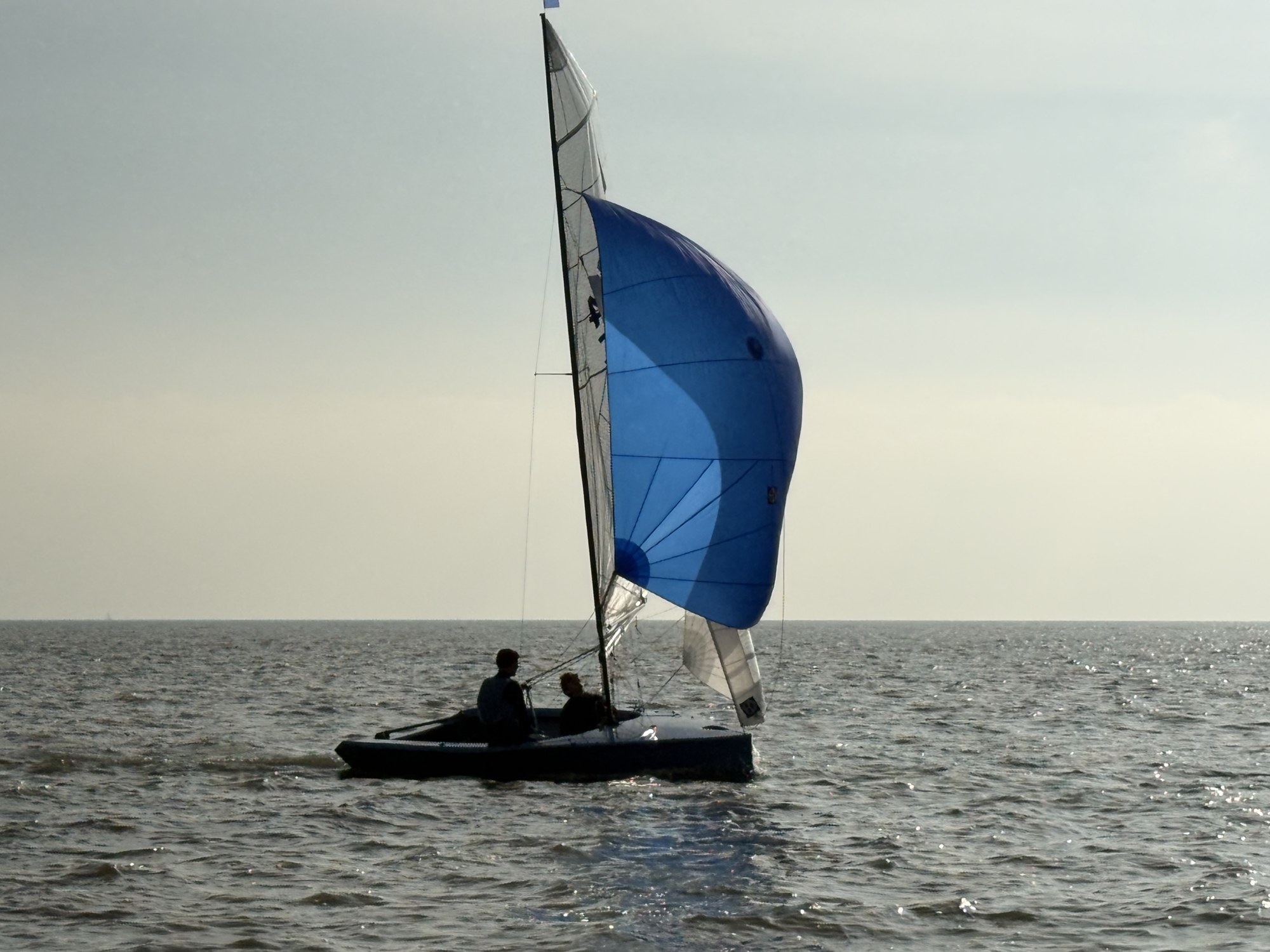
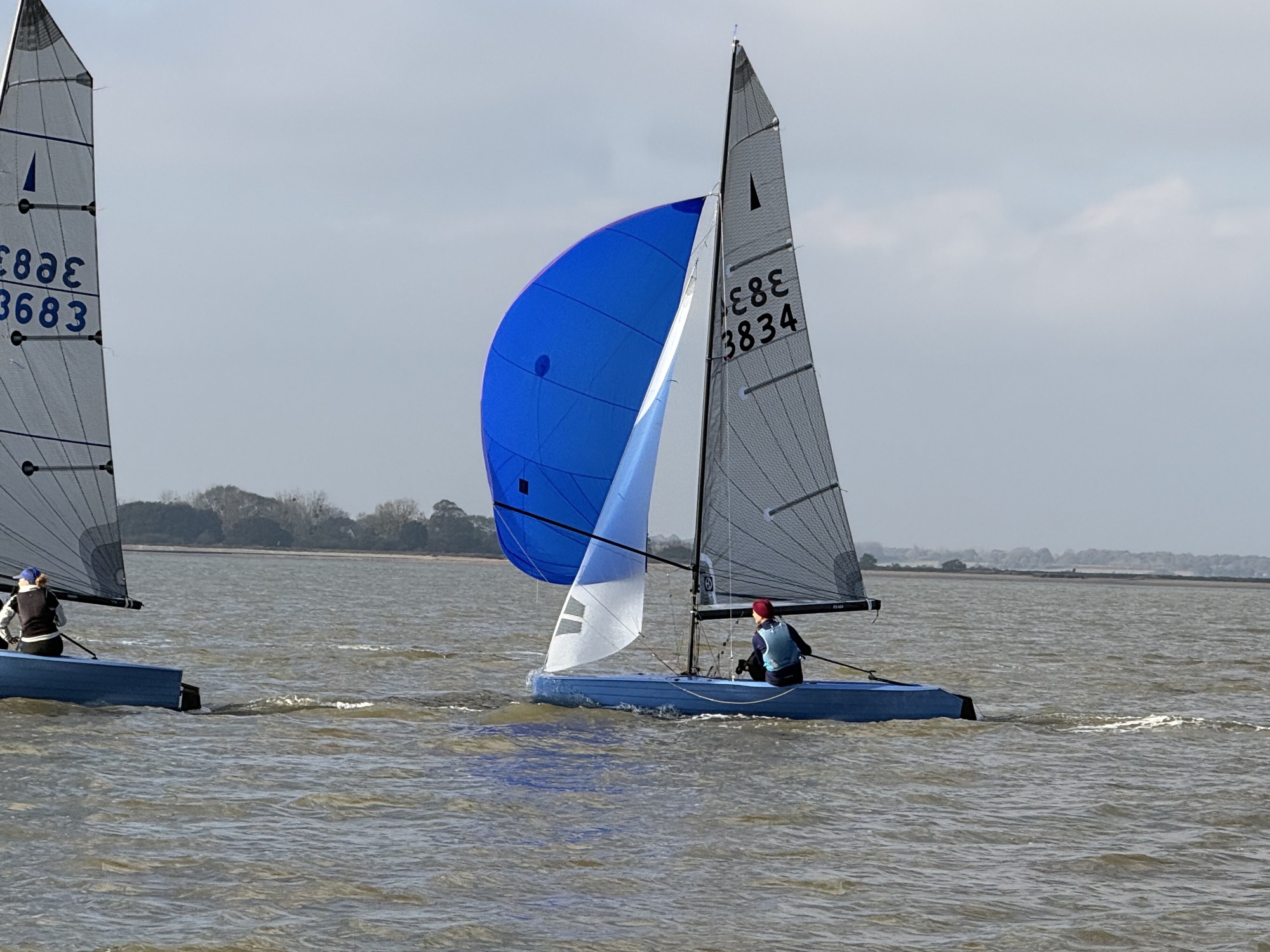
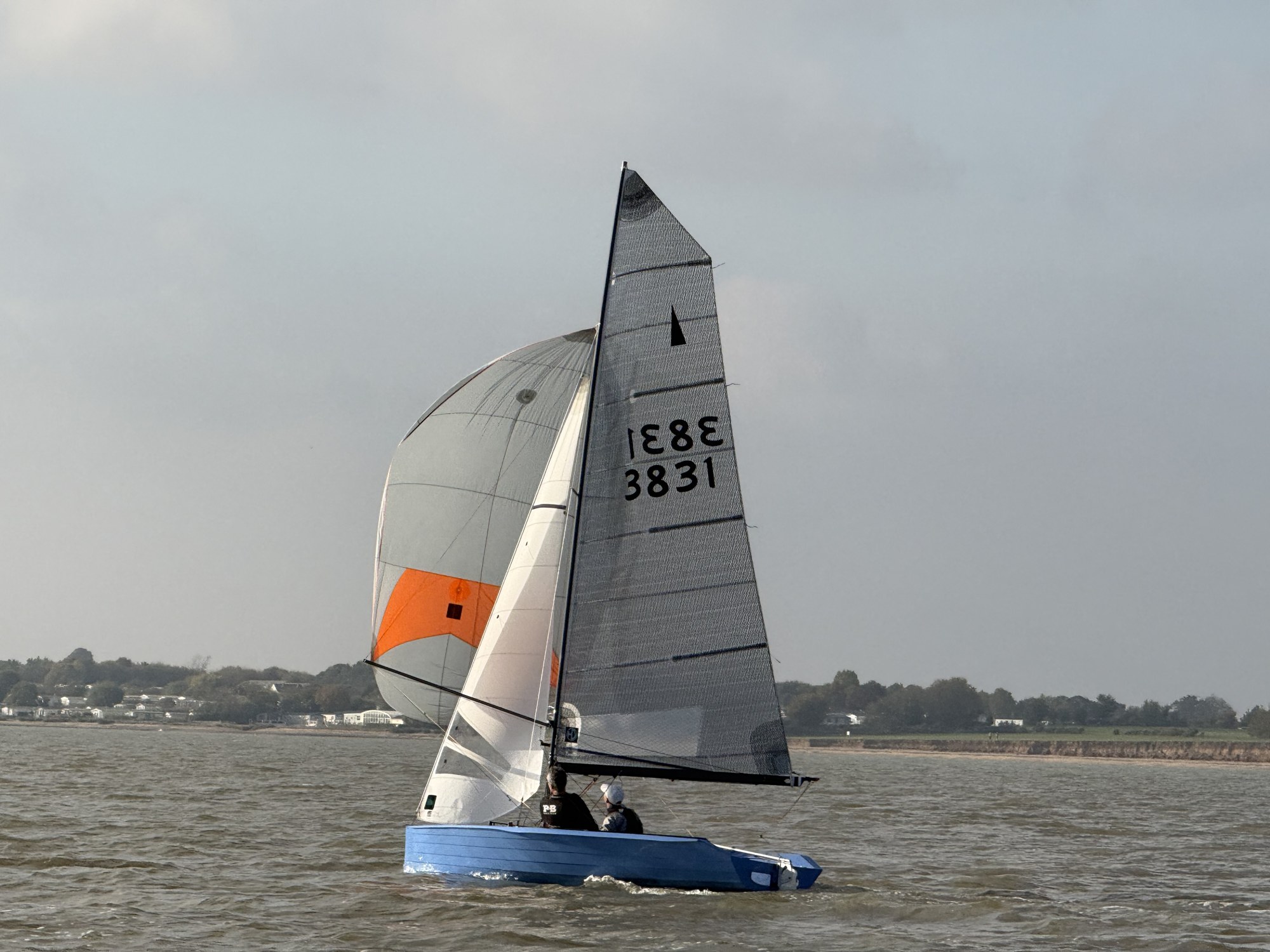
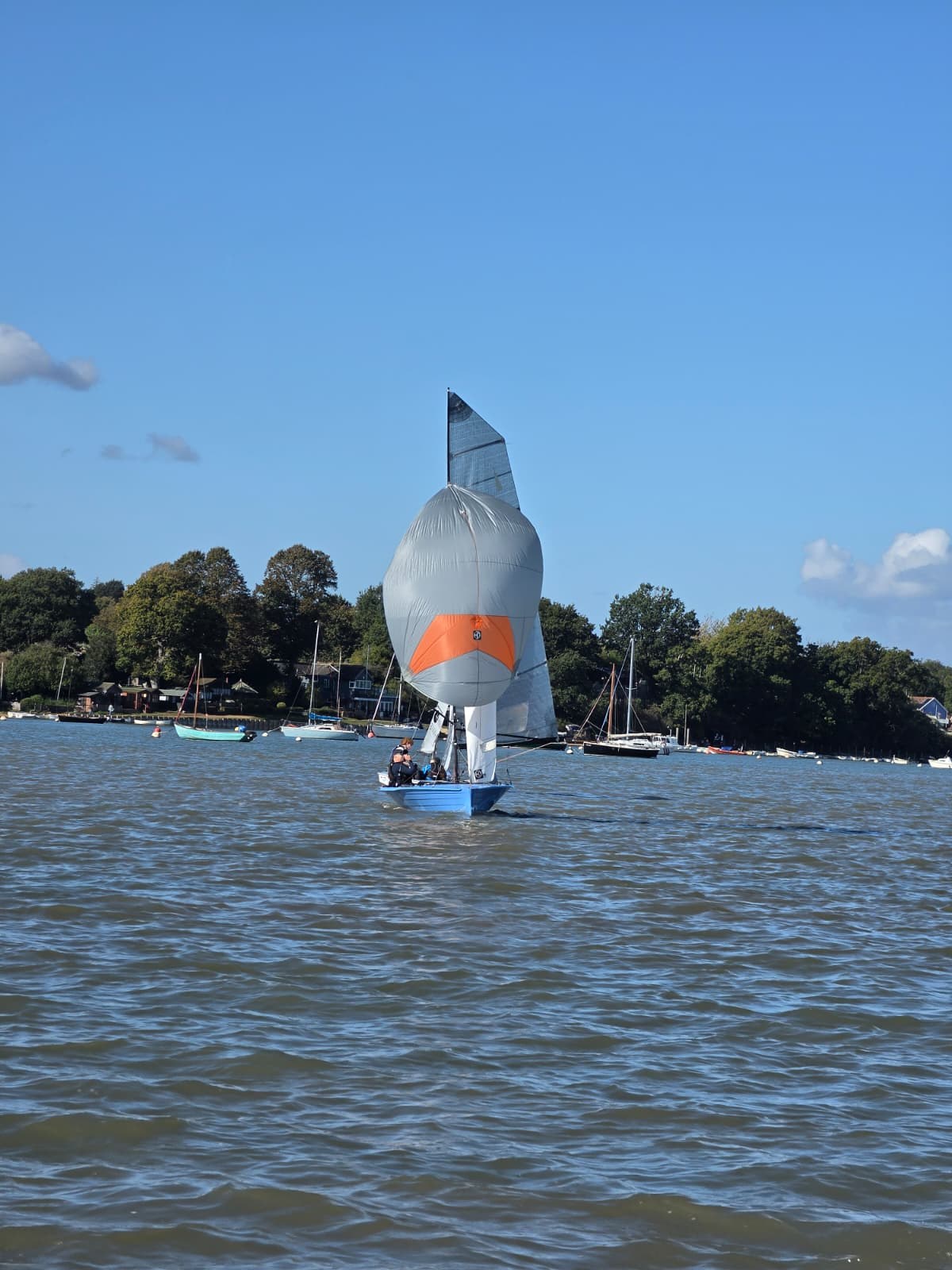
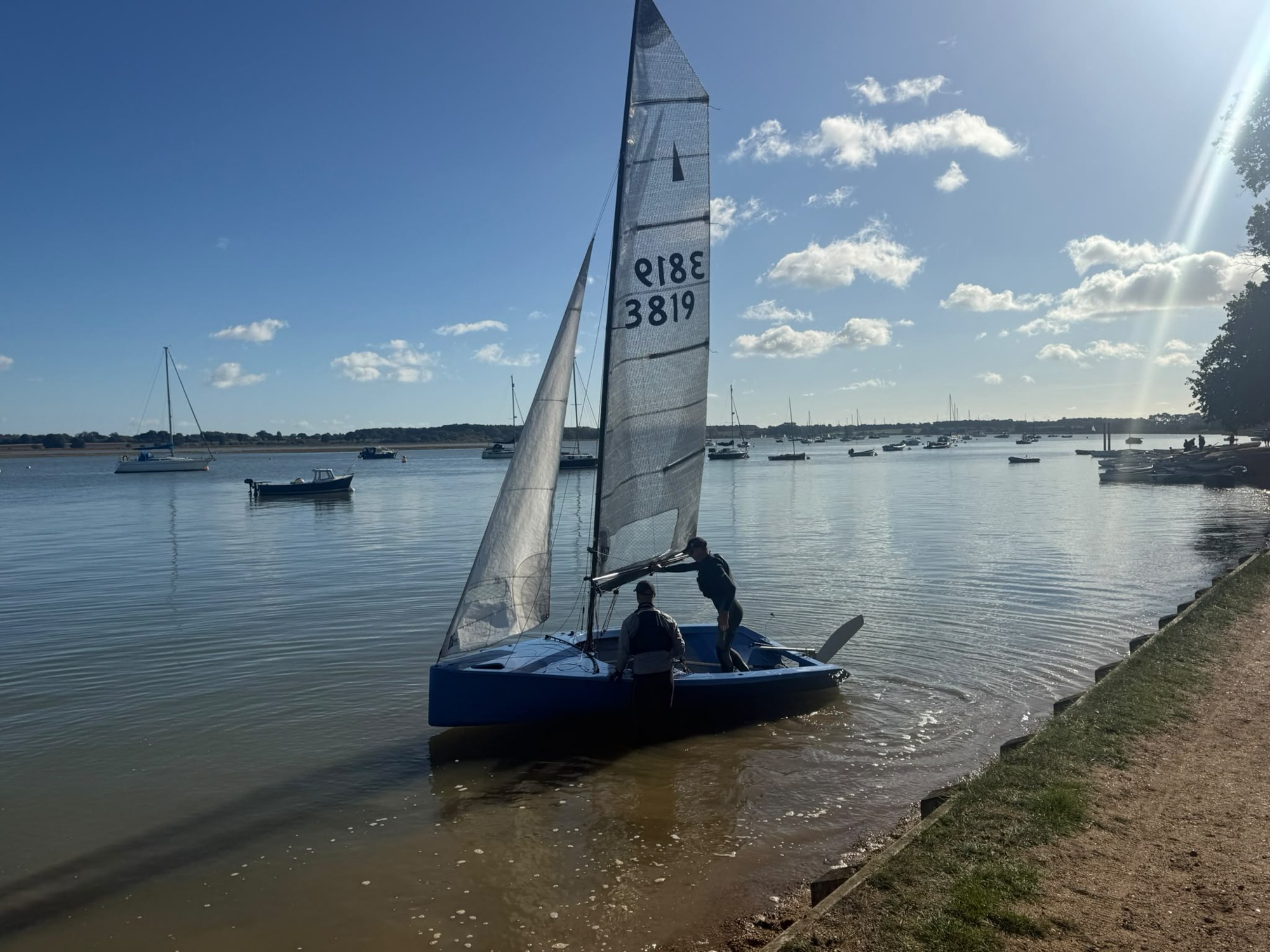
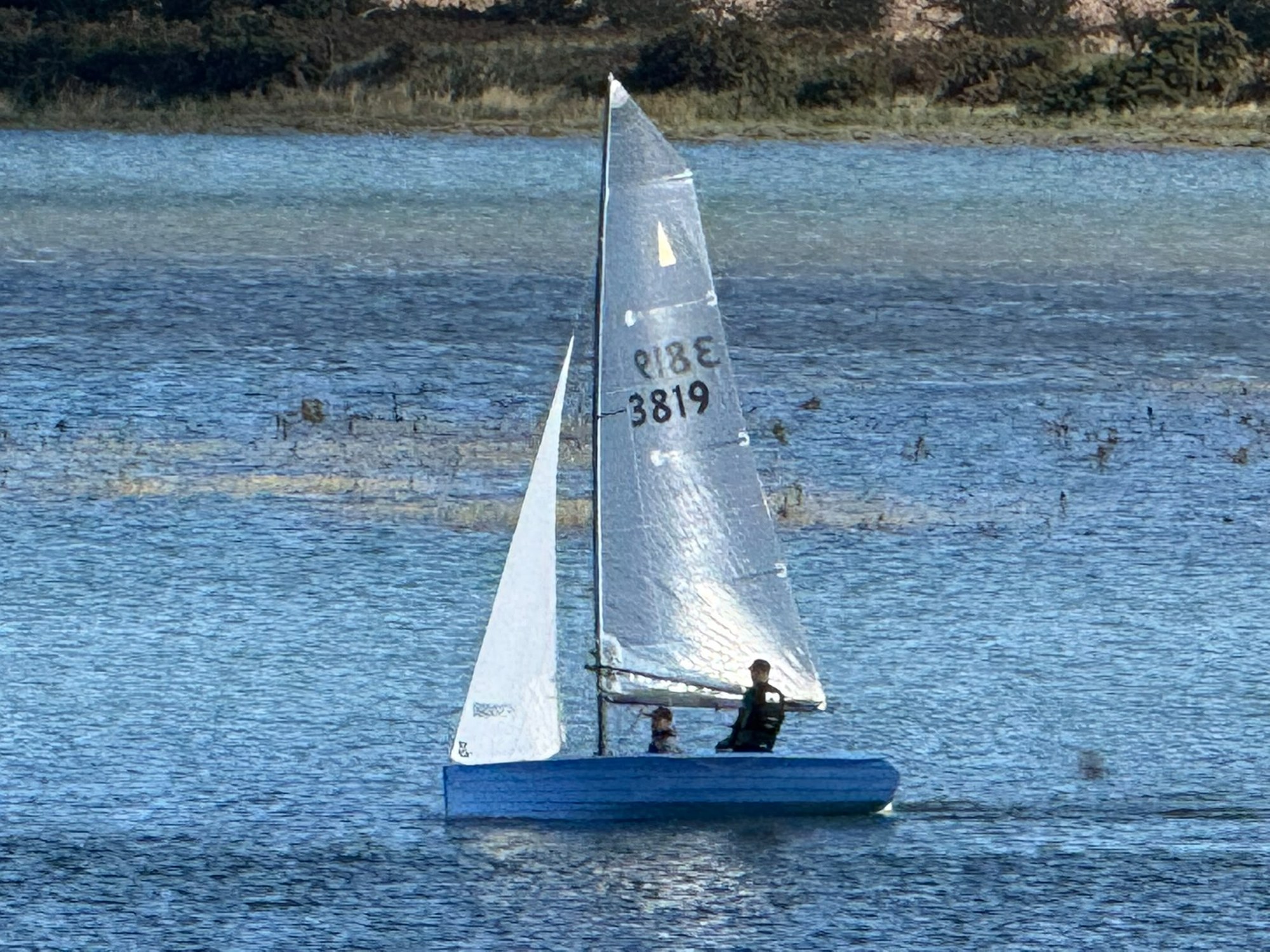
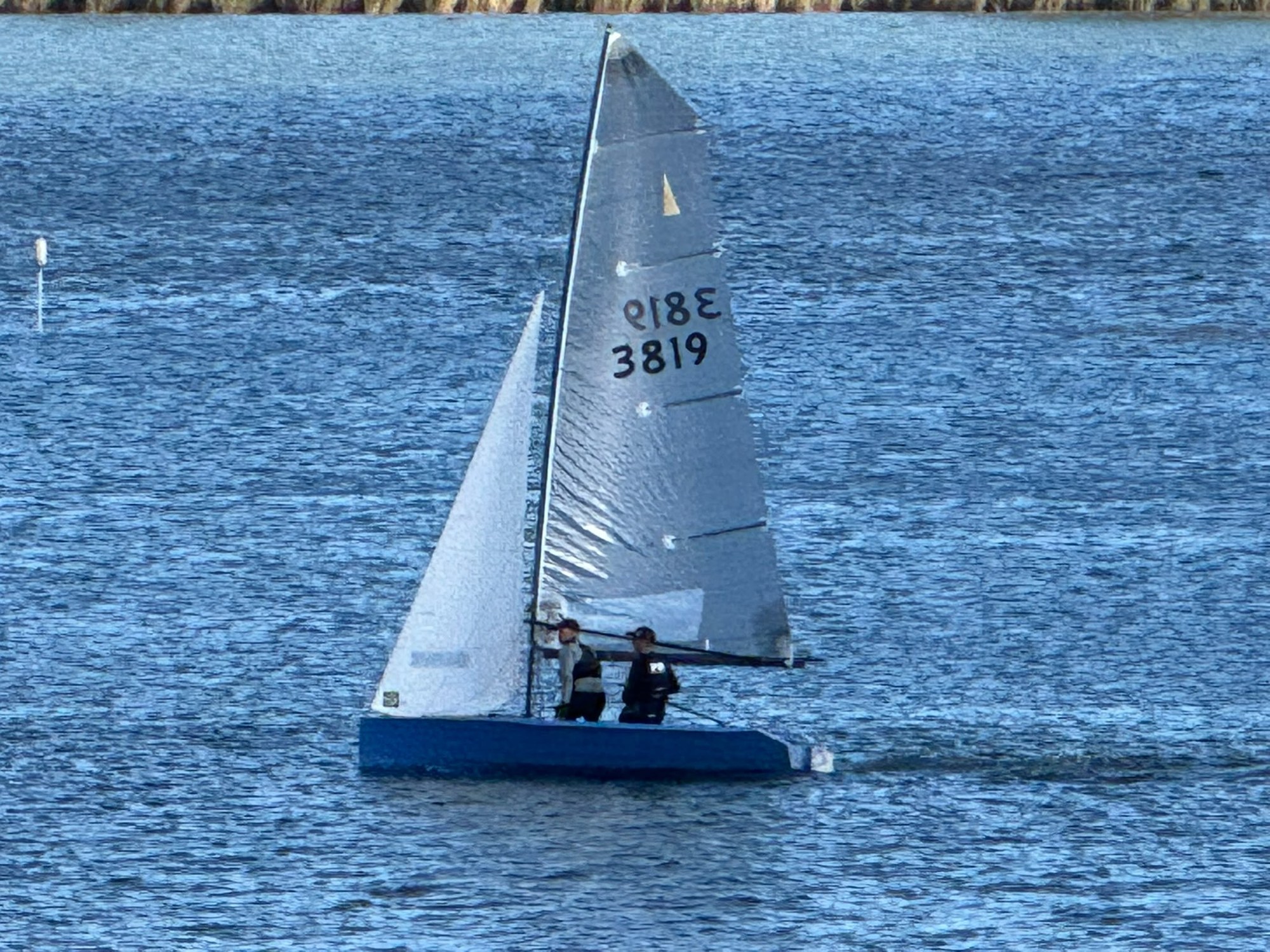
The first two boats are now on the water and performing well, demonstrating early planing and very good top-end speed. Tom Stewart and Rob Allen underlined that potential by winning the breezy final race at the 2026 Merlin Rocket National Championships.
Development and tuning continue, with particular attention being paid to dialling in the boats’ performance in very light winds.
The thinking behind the hull
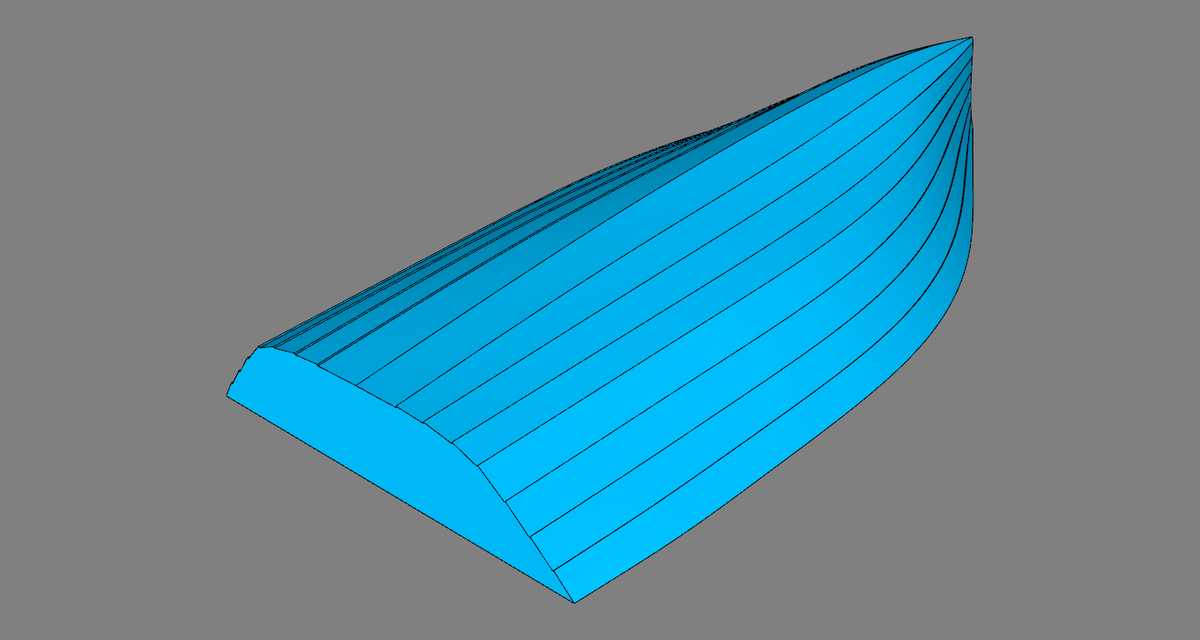
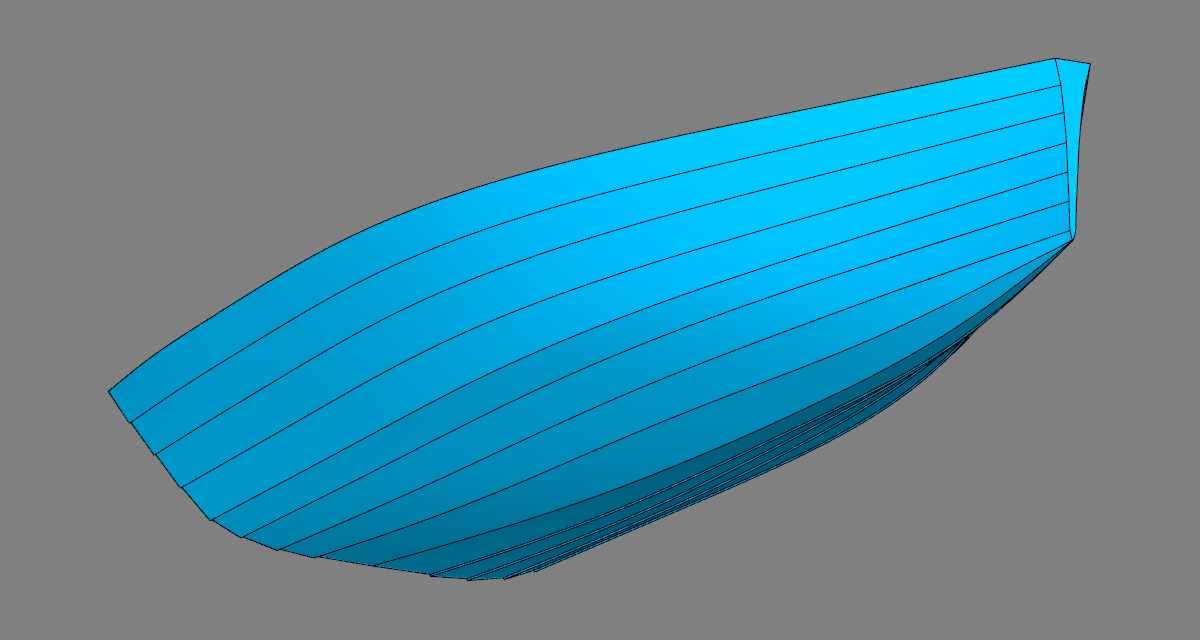
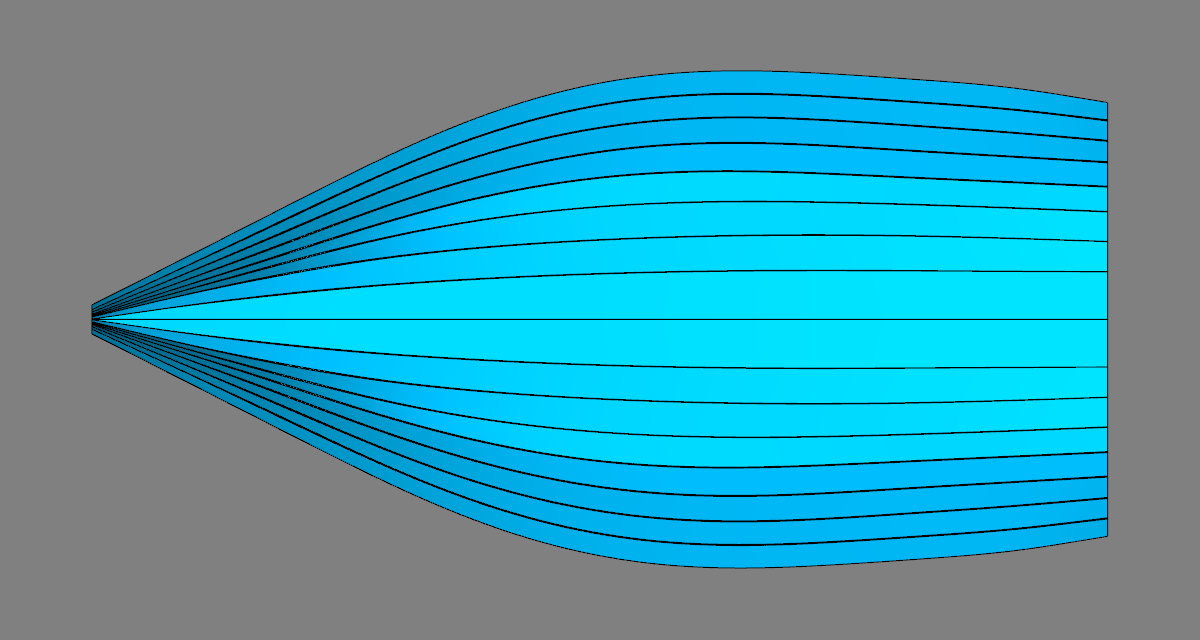
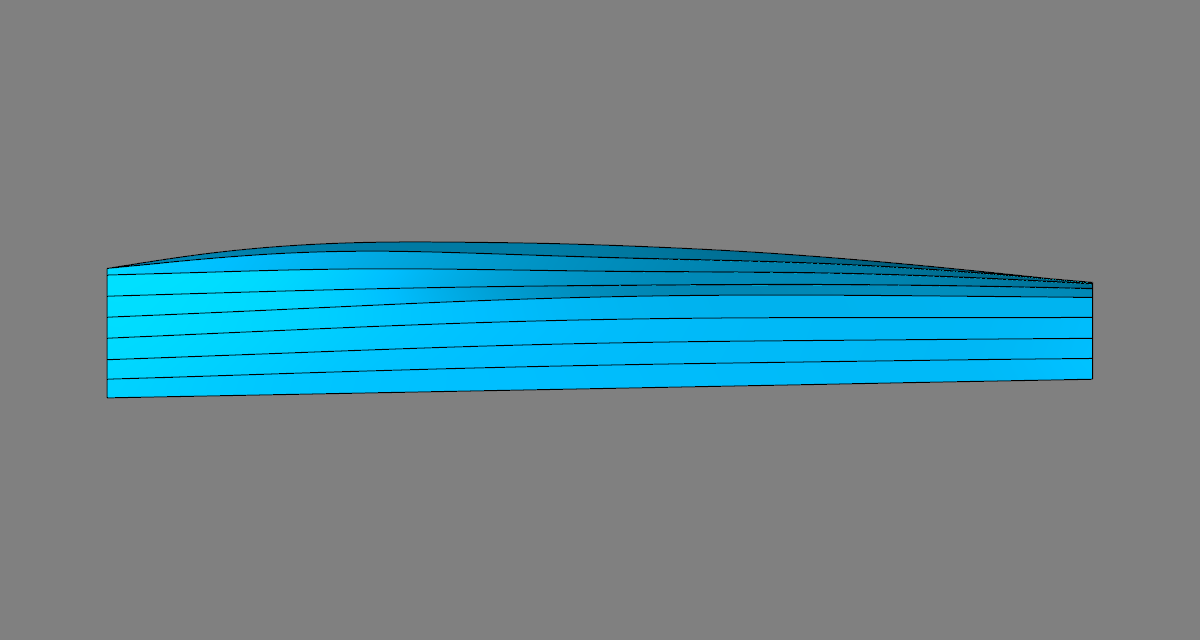
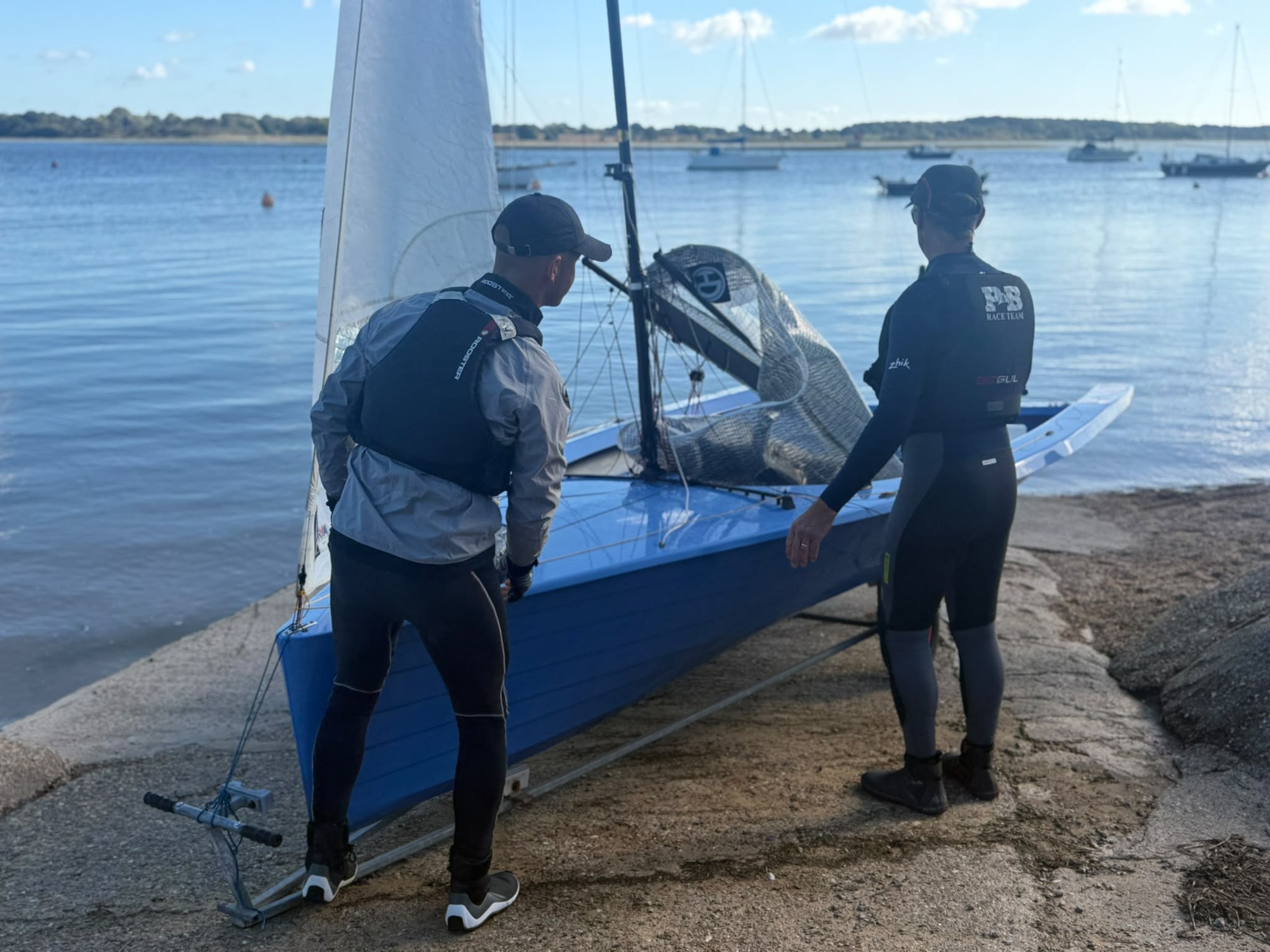
The design brings together a V-shaped midsection, a distinct chine and a finer waterline beam. More of the hull’s displacement is carried towards the bow and stern, giving it a high prismatic coefficient. This distribution of volume is intended to reduce wave drag through the transition to planing, helping the boat get onto the plane earlier. Dave’s original design notes below explain how these features work together and the aims for upwind performance.
The explanation below describes the design principles and original aims, including the ambition to make planing to windward advantageous.
Dave Hollom on the design
As can be seen the boat amidships has a V section and a distinct chine both of which reduce drag when on the plane.
V sections have less drag when on the plane than U sections, for a multitude of reasons that I will not go into here, but when was the last time you saw a U sectioned planing powerboat without a chine?
The V in the centre of the boat also allows a narrower waterline beam than a U section whilst still complying with the rise of floor measurement. The narrower waterline beam reduces wetted surface area, which will help in lighter airs, but also, because the water doesn’t have to go as far to get around the boat, reduces velocities in this area. This is useful because lower velocities mean less suction (Bernoulli’s theorem) and the less the suction the more easily the boat will rise onto the plane. It also, again for reasons I will not go into here, reduces lift induced wave drag which will allow the boat to sail either higher or faster or a combination of both when on the wind.
This V section morphs into as much of a U in the bow as is possible with a clinker hull together with a reasonably flat stern. The idea is to move the displacement lost in the middle of the boat to the ends of the boat and thus increase prismatic which reduces wave drag at most of the speeds of interest, without making the bow waterline any coarser.
In particular, a high prismatic reduces drag at the important hump speed and so allows the boat to get onto the plane more easily. The characteristics of both the International 14 and the National 12 are that they plane sooner and once on the plane are faster. Merlins are very nearly capable of planing to windward with advantage but aren’t quite there yet. I fully expect that this new design will break through that barrier and be capable of planing to windward with advantage.
Discuss your Merlin Rocket
Contact the workshop to discuss the current specification, fit-out options, pricing and lead times. We welcome enquiries from sailors interested in the design and its continuing development. If you have a rig or equipment you would like to carry over from an existing boat, let us know so we can discuss the right specification for you.
Merlin Rocket photographs
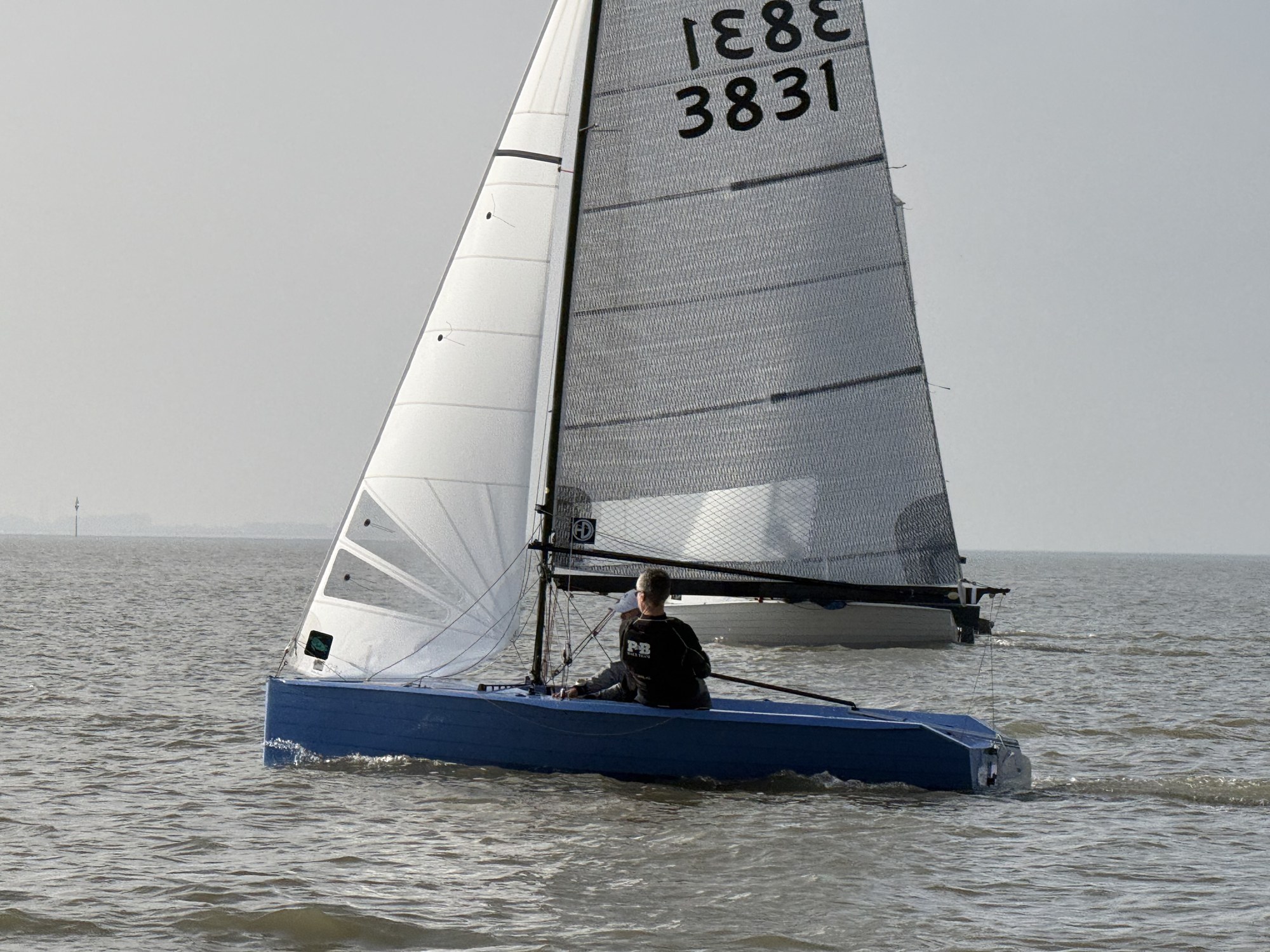
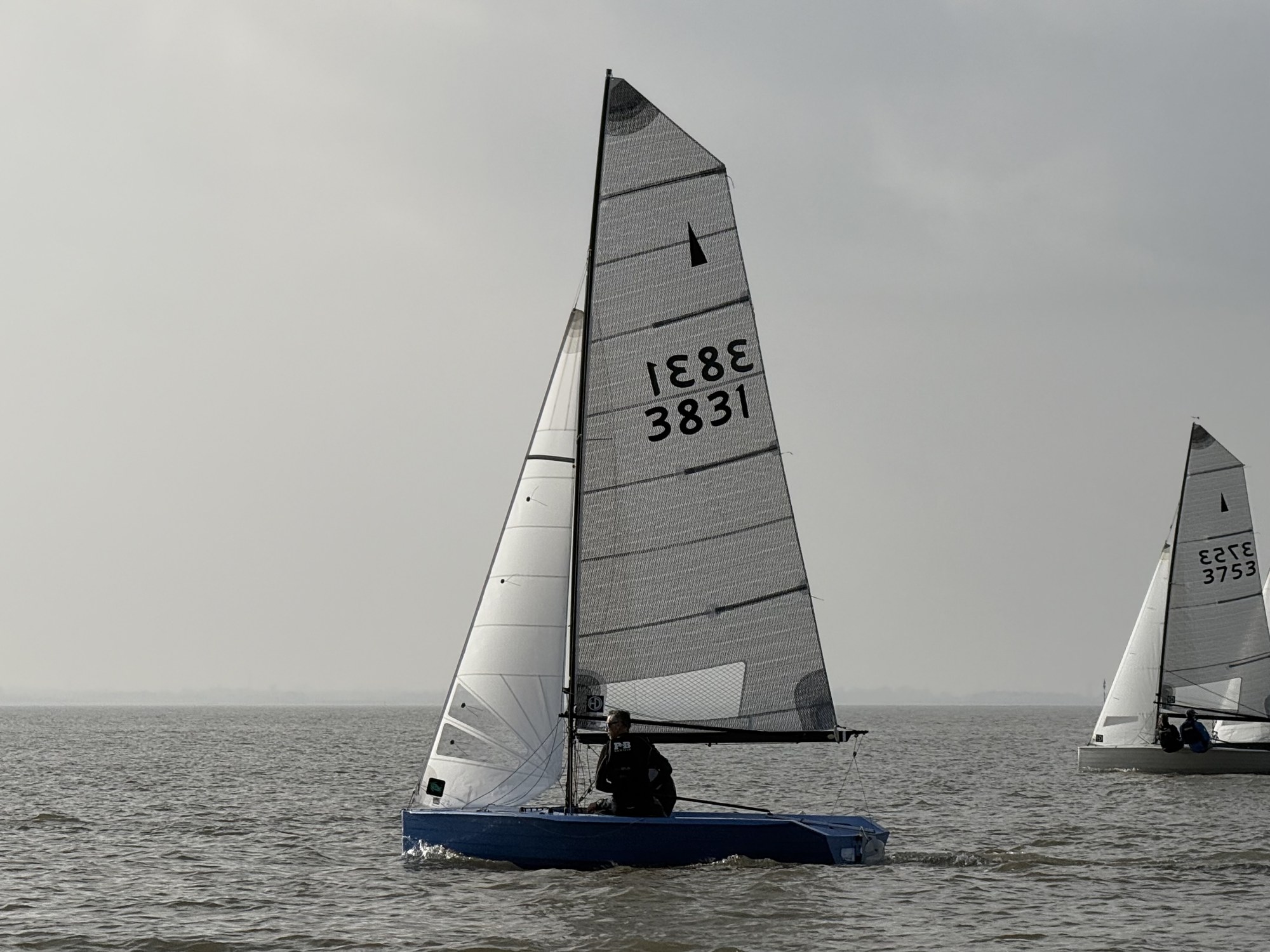
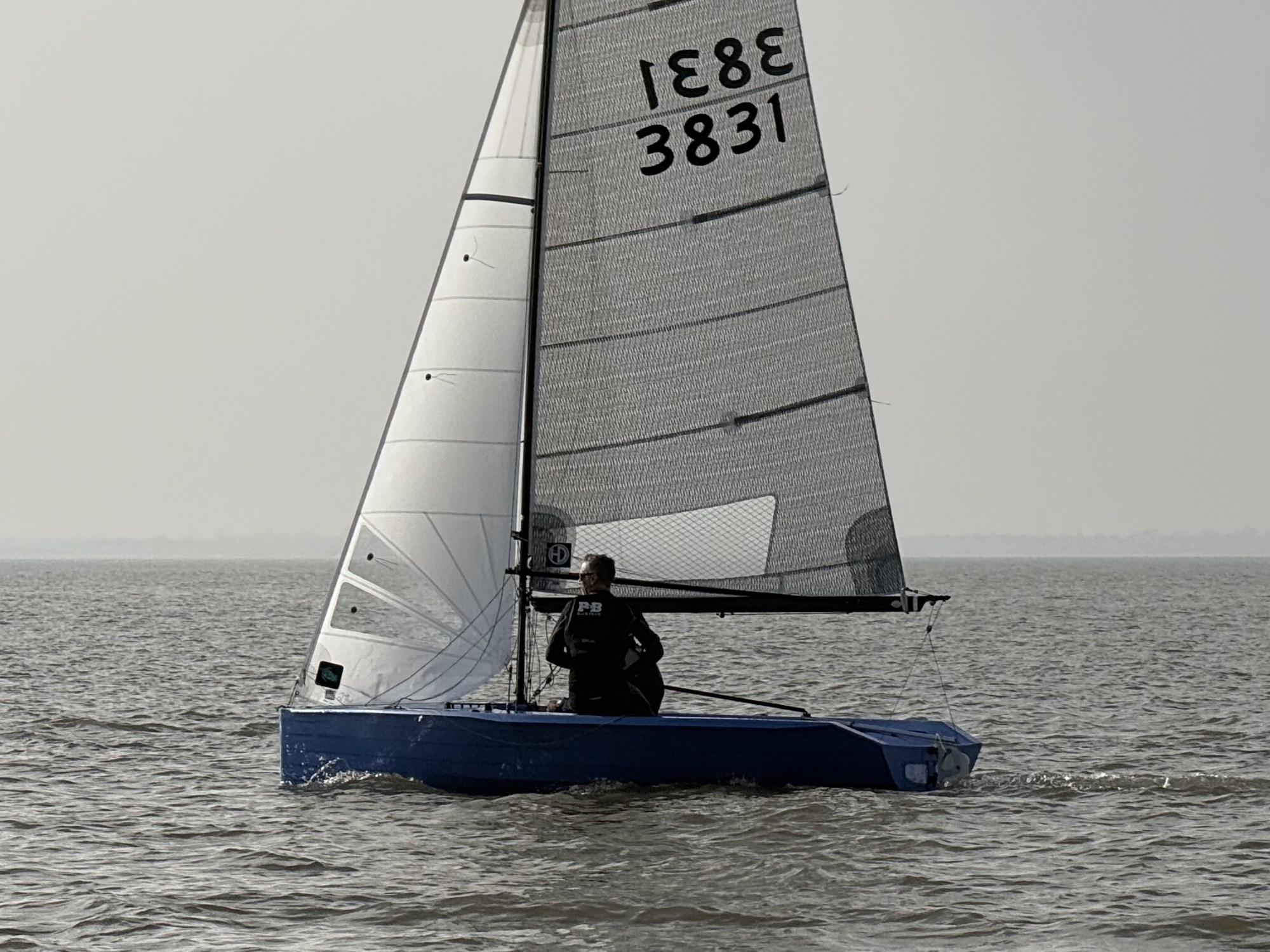
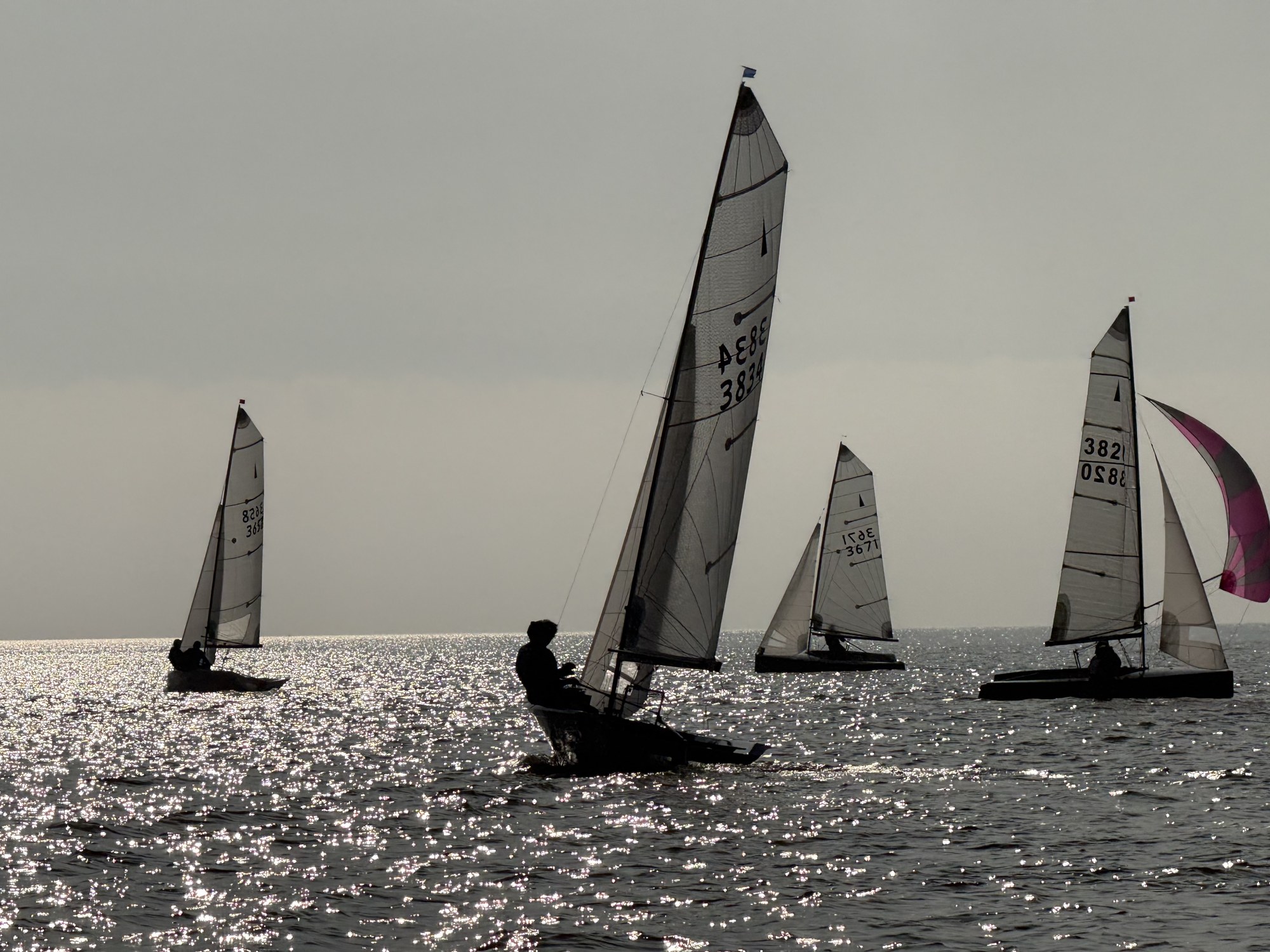
Merlin Rocket hull design